How to Buy a Used Enfield
This website is aimed at helping you to buy and tour around on a
used or second hand Royal Enfield motorcycle in India.

-At a Glance...-Which Motorcycle to Buy-|-Which Enfield Model
-How Much to Spend-|-Tips On Buying a Used Motorcycle-|-Legal Stuff
-Border Crossings-|-Maintenance & Statistics-| -Which Mechanic
-Buying in Deli-|-Labour Prices-|-Petrol Consumption-|-Touring Info
-Speed & Roads-|-Stuff to Carry-|-General Tips-|-Transportation on Train
-Links-|-Videos-|-Comments-Questions-|-The Author-...At a Glance
| By Jean-Paul |

"Not all who wander are lost.." - J.R. Tolkien Updated - Jan 2010 Created - Dec 2008 |
|---|
| [Videos] |
- Bike River Crossing 2007 Weekend Away 2008 - Part 1 - Part 2 - Who Checked the --Weather? 2008 |
| [Contibutors] |
Thanks to the following... Tom Brabers Jim Collins Murdy Murdooch Paul Read Phillipa Saxton |
| [My Guestbook] |

|
| [Links] |
Different Opinions - from royalenfields.com Horizons Unlimited - Motorcycle Touring How 2 buy Used Enfield Travelling India On A Royal Enfield Wiki How -Buying Used Enfield |
| [Counter] |
|
|
Advice on How to Buy a Used Royal Enfield Motorbike  Tips on How to Buy a Second Hand Royal Enfield Motorcycle 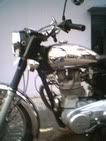 How to Buy Royal Enfield Motorbike How to Buy Royal Enfield Advice to Buy a Second Hand Royal Enfield Motorcycle Touring on a Royal Enfield Motor in India Tips to Buy a Second Hand Royal Enfield Motorbike Help to Buy a Used Royal Enfield Motorbike For Sale Royal Enfield Motorcycle Advice to Buy a Used Royal Enfield Motorcycle Help on Buying a Second Hand Royal Enfield Motorbike Advice Buying a Used Royal Enfield Motorbike Touring on a Royal Enfield Motorcycle in India Tips Buying a Used Royal Enfield Motorcycle For Sale Royal Enfield Motorbike Help on Buying a Used Royal Enfield Motorbike Touring on a Royal Enfield in India Advice on Buying a Second Hand Royal Enfield Motorbike Tips to Buy a Second Hand Royal Enfield Motorbike Help Buying Second Hand Royal Enfield Motorbike Want to Buy a Royal Enfield Motorcycle Advice on Second Hand Royal Enfield Motorbike Want to Buy a Royal Enfield Motorcycle Want to Buy a Royal Enfield Motorbike Tips Help Advice Royal Enfield in India Sell Royal Enfield Motorbike Royal Enfield Bullet For Sale Help on How to Buy a Used Royal Enfield Motorcycle |
Average Speed and Road ConditionsEnfields are really under powered for the size of their engine.
My manual optimistically claims it will do 120km/hr top speed. An Indian motorcycle review magazine pitches it at 100km/hr, which is what my speedo claims. 2-up and with luggage I scrape about 95km/hr.
Having said that, its quite rare to get an opportunity to ride at these speeds. Firstly the Enfield doesn't like to be ridden above 75 km/hr, I can feel the engine is starting to strain. Secondly the engine is not great for quick acceleration. If you want your Enfield to last then better ride it like the age it was designed. The 1950's.Thirdly, and most influentially, the roads and conditions are totally crap. Pot holes, flood waters, roads washed away etc make for slow riding.
In the Himalaya regions I average about 30-35 km/hr. (Even less as you get higher)
On the plains about 40km/hr.
That is not to say I sit on 40 km/hr. There are sections of road where one can speed up to say 70km/hr, and suddenly hit a traffic jam, or the road is under repair, or the road hasnt been repaired since it was built etc. Thus bringing down your average distance covered per hour. So I use these averages when planning my trip. Then I add breaks.
So a 200km ride is about a 5 hour ride on the plains and then I add 2 hours for breaks. After all, got to sniff the roses along the way. So its a long 8 hour day. Then you have to remember you want some day light to find a decent hotel. In some cities this can take upto an extra hour.
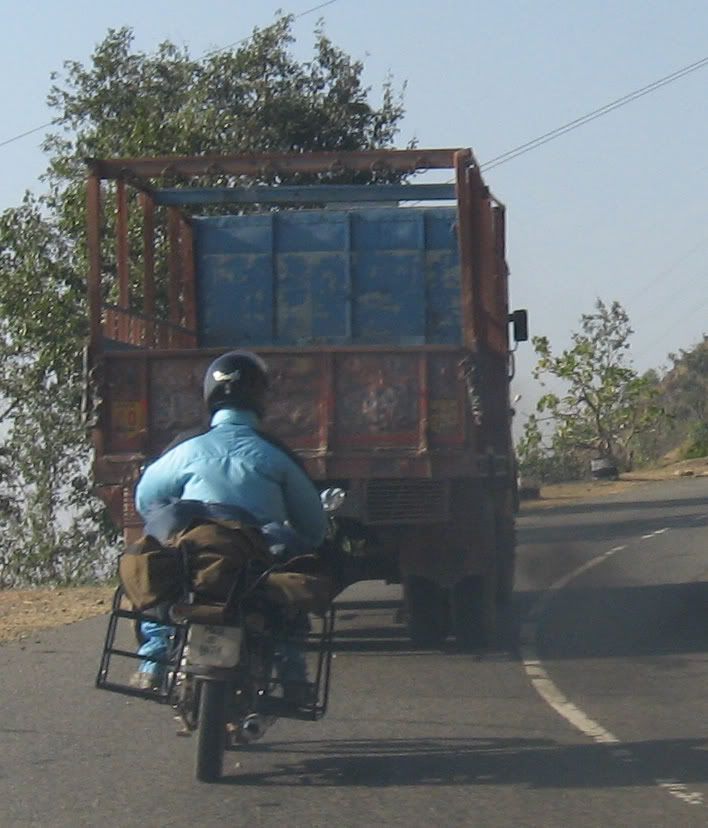
Touring on the plains is really tiring. Too many trucks and buses slowing you down, allowing you to drink their fumes. You dont cruise in India; I am in a constant state of alertness , its almost impossible to find a relaxed riding rhythm.
For example- turn a corner and farmer Joe has let his cows wonder all over it, or a truck is parked right in the middle of the road with a flat tyre etc. On dual carriage high ways there are trucks driving against traffic! So many times 40km/hr is too fast.
AntidoteA traveller told me recently he was travelling by bus in South India when it suddenly stopped at the side of the road. He was told they had to wait for the bus to be repaired.
The horn wasnt working...
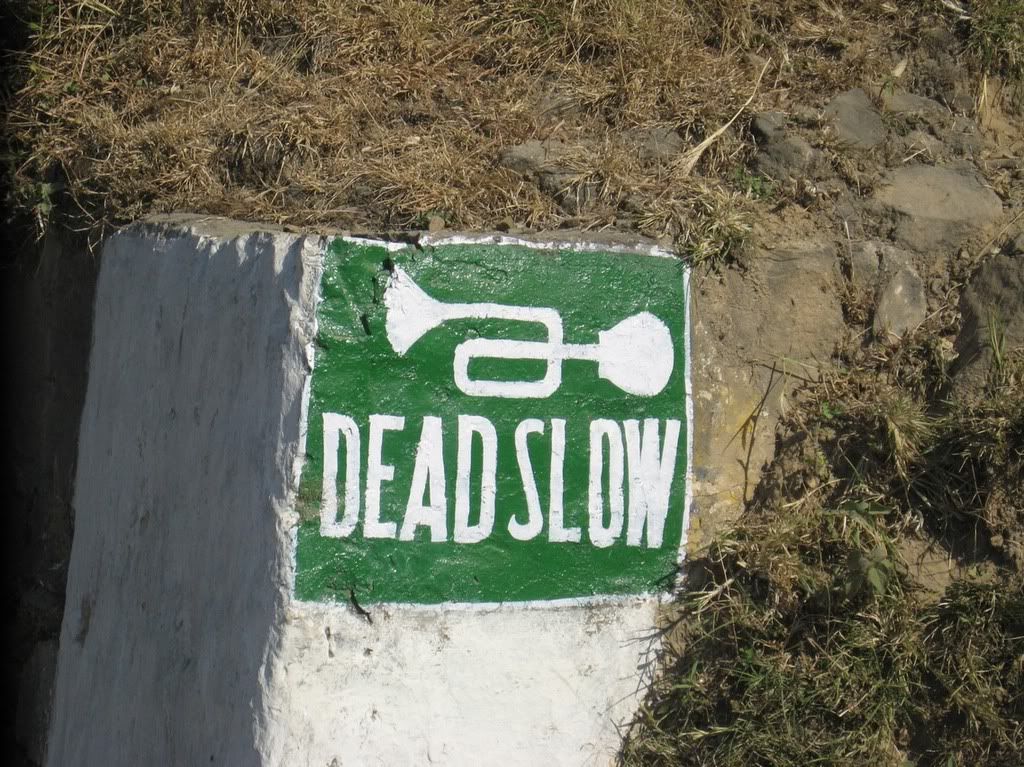
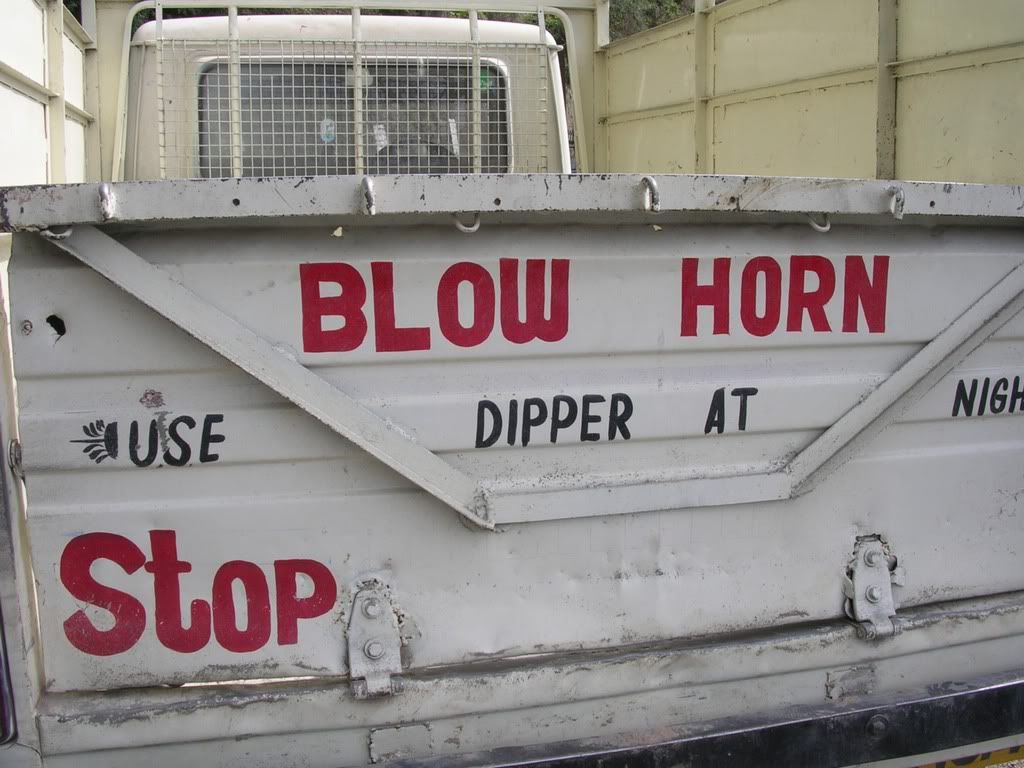
Indias only concept of road safety is a deafening loud horn, used at every, and I mean every, possible opportunity.>>Top